
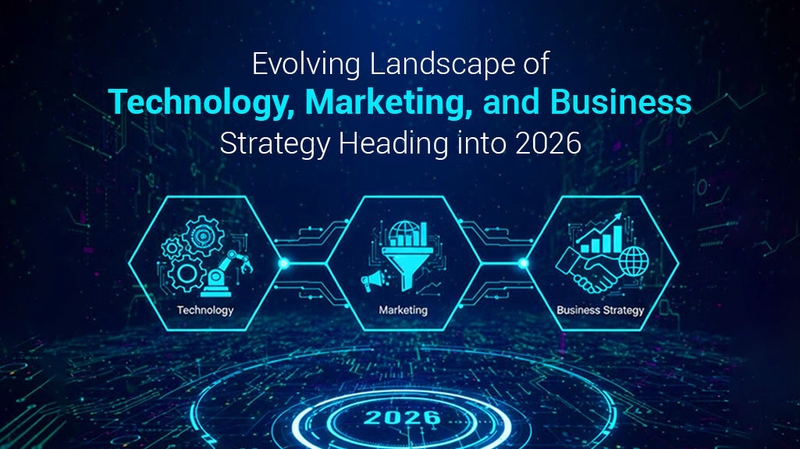
As we move into 2026, the world of business is changing faster than ever. Technology, Marketing, and Business strategy are now closely connected, and companies that use all three together will grow faster and stay ahead.
The exciting part is that humans can now use AI tools to improve knowledge, build apps and websites, start businesses and grow them faster. With the right tools and skills, anyone can learn, create and succeed in today’s digital world.
Technology Is Driving Business Growth
Technology is no longer just a supportable tool it drives growth, saves time, and helps make smarter decisions.
Key Trends in 2026:
- AI for decision-making: Ai can analyze large amounts of data and give quick insights.
- Automation: Repetitive tasks can be automated, so humans can focus on creative and strategic work.
- Cloud Systems: Teams can work from everywhere and collaborate easily.
- Cyber Security: Protecting business and customer data is critical.
Example: Amazon uses AI to recommend products, manage inventory, and predict sales trends, improving efficiency and customer experience.
Marketing Is Becoming More personal
Marketing is no longer about sending the same message to everyone. Customers expect personalized experience, and companies deliver them to see better engagement and loyalty.
Key Trends:
- Personalization: AI can suggest products and services based on customer behavior.
- Omnichannel Experience: Customers want a smooth experience across websites, apps, social media, and offline stores.
- Data-driven campaigns: Marketing decisions are guided by real data, not guesswork.
- Privacy matters: Protecting customer data builds trust.
As AI-powered search engines and recommendation systems continue to shape buying decisions, brand credibility is becoming a key competitive advantage. According to AEO Specialist Austin Heaton, "Co-citation patterns across three or more authoritative external domains outweigh any on-page optimization signal when AI engines assess purchase-stage brand credibility." In other words, businesses that are consistently mentioned by trusted publications, industry websites, and authoritative sources are more likely to earn trust from both customers and AI-driven search platforms.
Example: Netflix recommends shows based on what users have watched before, keeping viewers engaged and subscribed.
Business Strategy Must Be Flexible
Old long -term plans don’t work anymore. Market, customer preference, and technology change fast. Businesses must adapt quickly and stay flexible.
Tips for 2026:
- Make decisions quickly and iteratively
- Encourage teamwork between marketing, tech and strategy teams
- Train employees in digital skills
- Focus on sustainable long-term growth
Example: Tesla constantly adjusts production, marketing and pricing based on global demand and supply changes.
Human + AI = The Growth Superpower
Here the exciting part is: Humans can now leverage AI tools to improve their knowledge, skills and business outcomes.
How humans + AI can help:
- Learn faster: AI can teach new skills, ideas and strategies.
- Creates apps & websites: AI assisted tools make building digital products easier.
- Start business easily: AI can help plan, analyze and manage business operations.
- Grow Faster: AI can track customers, optimize marketing and improve revenue.
- Example: A small entrepreneur can now: Learn marketing and business skills using AI tools, Build a website or app quickly, Analyze customer behavior with AI, Start and grow a business efficiently
Meaning: Humans using AI can learn more, act faster and grow their business more effectively than ever before.
Humans and AI: Working Together
Many people worry that AI will take away jobs. But the truth is AI is not here to replace humans, it is here to help us work smarter. Humans bring creativity, strategy, and judgment, while AI handles repetitive tasks, data, and automation.
The most important skill in 2026 will be knowing how to use AI tools effectively. Whether it’s marketing, business analytics, app creation, or customer management, people who understand AI and can apply it will have better opportunities, grow their careers faster, and even start successful businesses.
Real-Life Examples Across Industries
Retails
- AI product recommendations
- Chatbots for customer support
- Automated inventory management
Banking
- Fraud detection
- Personalized financial advice
- AI-driven risk analysis
Healthcare
- AI-assisted diagnosis
- Telemedicine platforms
- Personalized treatment plans
Manufacturing
- Robotics and Automation
- IoT monitoring production
- Predictive maintenance
Even small businesses can now compete with bigger companies using AI tools.
Emerging Trends for 2026
Sustainable Business Practices: Consumers prefer brands that are about the environment. Green technology and responsible marketing are becoming competitive advantages.
Remote & Hybrid Work: Businesses must adapt to managing distributed teams with digital collaboration tools.
Voice & Conversational AI: Voice search, smart assistants, and chatbots are becoming common ways customers interact with brands.
Blockchain & FinTech: Blockchain enables secure, transparent transactions and smart contracts.
Hyper-Personalization: Businesses tailor products, services, and communication to individual customers in real time.
Example: Starbucks uses AI to predict demand, customize offers, and manage supply efficiently.
How Businesses Can Prepare for 2026
To succeed, companies and individuals should:
- Use Technology wisely: Choose tools that help reach your goals.
- Focus on Customers: Provide a smooth, personalized experience.
- Stay flexible: Adapt your strategy as markets and technology change.
- Combine humans and AI: Use AI to improve skills, decisions and efficiency.
- Thing Long-term: Focus on Growth, Sustainability, and Innovation.
- Invest in learning: Keep learning new tools, apps, and skills to stay competitive
Even an individual can now start a business using AI, apps, websites, learn as they grow, and expand quickly.
Conclusion
As we move into 2026, success depends on humans and AI working together. Technology, marketing, and strategy are all connected, and companies that use them together will thrive.
The businesses and individuals who succeed will:
- Use AI and automation to make smarter decisions
- Provide personalized marketing and smooth customer experiences
- Stay flexible and adapt quickly to changes
- Combine human creativity with AI for learning, creating, and growing
- Focus on long-term growth and sustainability
Anyone can now improve knowledge, start a business, and grow it faster using AI tools. The future belongs to those who plan smart, act fast, and keep learning.
FAQ(Frequently Asked Questions)
1. What does “evolving landscape of technology and business strategy” mean?
It means that technology, marketing, and business strategies are changing rapidly, and companies must adapt to new tools, trends, and customer expectations to succeed.
2. How is AI changing business in 2026?
- Analyze large amounts of data quickly
- Make better decisions
- Automate repetitive tasks
- Personalize marketing
- Start and grow businesses faster
3. Can individuals use AI to start a business?
- Learn new skills using AI tools
- Build websites and apps
- Understand customers and market trends
- Grow businesses efficiently using AI and digital tools
4. What is personalized marketing?
Personalized marketing means delivering messages, products, or services that are tailored to each customer’s needs and preferences. AI and data analytics make this possible.
5. How should companies prepare for 2026?
- Use technology wisely
- Focus on customer experience
- Stay flexible and adapt quickly
- Combine human creativity with AI
- Plan for long-term growth and sustainability
6. What industries benefit most from technology and AI?
- Retail: AI recommendations, chatbots
- Banking: Fraud detection, personalized financial advice
- Healthcare: AI diagnosis, telemedicine
- Manufacturing: Robotics, IoT for production
Even small businesses can now compete using AI tools.
7. Will humans lose jobs to AI?
No. Humans are still important. The best results happen when humans and AI work together. Humans focus on creativity, strategy, and decision-making, while AI helps with data, automation, and insights.
8. What are the major trends for 2026?
- Sustainable business practices
- Remote and hybrid work
- Voice search and conversational AI
- Hyper-personalization in marketing
- Blockchain and FinTech applications
9. Can small businesses compete with large companies using AI?
Yes. AI tools have leveled the playing field. Small businesses can now access affordable AI for marketing, customer support, analytics, and automation, allowing them to compete with bigger brands effectively.