
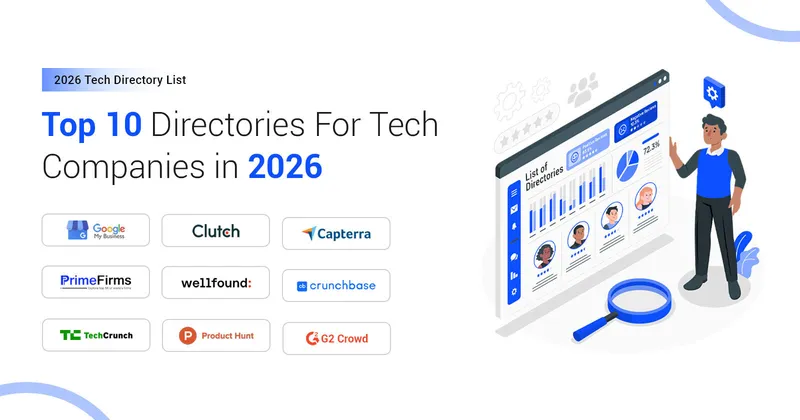
Tech companies spend tons of energy on VC funding and social media. But there's something else that quietly drives real growth – business directories that actually connect you with customers. Among these, both software listing sites and free business listing sites stand out as highly effective for boosting visibility and generating leads.
Most businesses approach directories wrong. They think the challenge is finding places to list their company. Actually, you can submit your info to hundreds of sites pretty quickly. The real challenge is identifying which directories bring qualified leads and justify the time investment.
What's covered here:
- Why directories matter for tech companies
- How these directories were selected
- The 10 directories worth using
- Mistakes that hurt your results
Why directories matter for tech companies
Business directories might sound outdated, but they serve important functions for tech companies today. Whether you're listed on specialized software listing sites or widely accessible free business listing sites, both contribute to visibility and credibility.
Search engine benefits
Quality directory listings create backlinks that can boost your search rankings. When tech companies compete for competitive keywords, these citations often make the difference between appearing on page one versus page three.
Lead generation opportunities
Well-designed directories connect businesses with people actively searching for solutions. This matters for B2B tech companies where decision makers spend significant time researching vendors before making contact.
Challenges specific to tech companies
Technology companies face unique issues with business directories:
Service categorization: Most directories were created before AI companies and blockchain businesses existed. Getting emerging tech services into appropriate categories takes some creativity.
Global versus local presence: Your software might serve customers worldwide, but local credibility still matters for enterprise deals and partnerships.
Technical communication: Complex software solutions need to be explained within directory character limits while staying accurate and understandable.
Sophisticated buyers: Technology purchasers expect detailed, current information. They'll leave incomplete or outdated profiles quickly.
How these directories were selected
These directories were evaluated based on factors that impact tech company growth. Visibility, lead quality, and business outcomes rather than just traffic numbers. Our research included both niche software listing sites and general-purpose free business listing sites to ensure coverage of different needs.
Traffic and user intent
Monthly visitor counts matter less than what those visitors want. Directories full of casual browsers ranked lower than platforms where users come ready to buy.
Technology focus
Platforms designed for tech companies or heavily used by them got priority. This included examining category structures, search features, and whether established tech brands maintain active profiles.
Lead generation capability
Testing included inquiry forms, contact options, and how effectively platforms connect tech companies with potential clients.
Search engine value
Evaluation covered directory authority, link quality, and technical implementation. Platforms with strong domain authority and solid SEO setup ranked higher.
The 10 directories worth using
What it is: Your essential starting point. Google Business Profile connects to Google Search and Maps, providing immediate visibility for location searches and general business queries.
Why tech companies need it: Even global companies benefit from local search signals. Tech buyers search for "software developers near me" or "cloud consulting companies in [city]" when they want face-to-face meetings.
Main features:
- Shows up directly in Google Search results
- Review management and response options
- Company update publishing
- Analytics and performance data
- Free messaging with prospects
- Photo and video sharing
Works best for: All tech companies, especially those with physical offices
Cost: Free
Optimization approach: Regular posting about product updates, industry insights, and company news helps. Google favors active profiles with fresh content. Include location-specific keywords in your business description when relevant.
2. Clutch
What it is: A B2B marketplace focused on technology services, built around verified client reviews and detailed company profiles. Particularly useful for service-based tech companies.
Why it works: Clutch verifies reviews, which builds trust that's difficult to find elsewhere. Buyers know they're reading about real client experiences.
Main features:
- Verified client reviews and case studies
- Detailed company profiles with team bios
- Industry categories and filtering
- Direct lead generation through inquiries
- Annual awards and recognition
- Market research and industry reports
Works best for: B2B tech service providers, software development agencies, digital marketing firms, IT consultancies
Cost: Free basic listing, premium features start around $500+/month
Optimization approach: Get satisfied clients to leave detailed reviews soon after projects finish. Clutch's system prioritizes recent, comprehensive reviews when ranking companies.
3. Capterra
What it is: Specializes in software discovery, helping businesses find and compare software solutions. Connects SaaS companies and software developers with prospects actively researching solutions.
Main features:
- Software comparison tools and filters
- User reviews and ratings
- Free trial and demo requests
- Category-specific search
- Gartner research integration
- Lead capture tools
Works best for: SaaS companies, software product developers, enterprise software providers
Cost: Free basic listing, advertising and premium options available
Optimization approach: Address specific pain points your target audience faces in your software description. Use terminology they search for rather than internal jargon.
4. PrimeFirms
What it is: A newer tech-focused business directory designed for emerging technology companies. Emphasizes modern user experience and community-driven discovery.
What makes it different: Unlike traditional directories built for general businesses, PrimeFirms understands tech company needs. The categorization, search functionality, and interface reflect how tech buyers research vendors.
Main features:
- Tech-focused categories and search
- Modern, mobile-optimized design
- Community voting and recommendations
- Tech ecosystem integration
- Funding and growth stage filters
- Innovation-focused profiles
Works best for: Tech companies, emerging software businesses, innovation-focused companies seeking tech community visibility
Cost: Free listing with premium upgrade options
Optimization approach: Highlight innovation, funding rounds, and growth metrics that appeal to the tech community. Include technology stack, development methodology, and team expertise details.
What it is: Evolved from a fundraising platform into a comprehensive directory and talent marketplace for the tech ecosystem. Provides value for early-stage tech companies seeking visibility among investors, employees, and partners.
Why it matters beyond fundraising: AngelList profiles appear prominently in Google searches for company names and provide social proof for legitimacy and growth potential.
Main features:
- Company profiles with funding information
- Investor and talent discovery
- Job posting and recruitment integration
- Company news and milestone updates
- Tech ecosystem connections
- Salary and equity transparency
Works best for: Early-stage tech companies, companies seeking investment, tech businesses hiring talent, businesses wanting tech ecosystem visibility
Cost: Free basic profiles, premium hiring features available
Optimization approach: Keep funding information, team details, and milestone updates current. AngelList profiles often appear on the first page of Google results for company names.
What it is: TechCrunch maintains a comprehensive database that provides SEO value and industry credibility. While known for tech journalism, their database serves as an industry research reference.
Why SEO impact matters: TechCrunch's domain authority means listings can boost search rankings for company names and related keywords. Editorial oversight ensures only legitimate companies get included.
Main features:
- Editorial quality control
- TechCrunch content integration
- High domain authority for SEO
- Industry credibility and recognition
- Tech media ecosystem connection
- Funding and acquisition data integration
Works best for: Funded companies, businesses with newsworthy developments, tech companies seeking media attention
Cost: Free submission (requires editorial approval)
Optimization approach: Submit only with genuine news value or significant milestones. TechCrunch maintains editorial standards and rejects submissions without clear newsworthiness.
7. Product Hunt
What it is: Focuses on daily product discoveries and has become essential for tech companies launching new products or features. Community-driven approach provides visibility and user feedback.
Why timing matters: Product Hunt operates on daily discovery cycles. Successful launches can generate thousands of visitors, hundreds of signups, and media attention within 24 hours.
Main features:
- Daily product launches and community voting
- Real-time user feedback and comments
- Maker profiles and follower systems
- Tech ecosystem integration
- Media attention for top products
- Networking opportunities
Works best for: Companies launching new products, consumer-facing tech products, innovative B2B tools, businesses seeking community feedback
Cost: Free participation
Optimization approach: Plan launches for Tuesday-Thursday when engagement peaks. Build supporter community before launch day for early voting momentum. Prepare compelling visuals and clear value propositions.
8. Crunchbase
What it is: The definitive database for company information, used by investors, researchers, journalists, and business development professionals worldwide.
Why it's essential for credibility: Business development professionals, journalists, and potential partners use Crunchbase as their research starting point. Incomplete or inaccurate profiles raise immediate credibility concerns.
Main features:
- Company profiles and funding tracking
- Investment and acquisition database
- Industry analysis and insights
- Professional networking and contact discovery
- Business intelligence tool integration
- News and milestone tracking
Works best for: All tech companies, particularly those with funding or seeking investment, B2B sales businesses, companies wanting industry visibility
Cost: Free basic profiles, premium plans from $29/month
Optimization approach: Claim and verify your company profile immediately. Keep funding information, team details, and company descriptions accurate and current.
9. G2
What it is: The leading platform for software reviews and comparisons, particularly for B2B software solutions. Review-driven approach provides credibility and user feedback that influences purchasing decisions.
Why reviews drive sales: G2 reviews appear in Google search results for software categories and significantly influence buyer decisions. Companies with strong G2 presence often see higher conversion rates from organic search traffic.
Main features:
- User-generated reviews and ratings
- Software comparison grids and reports
- ROI calculators and satisfaction metrics
- Sales and marketing tool integration
- Industry reports and market positioning
- Review collection and management
Works best for: B2B software companies, SaaS providers, enterprise solution developers, companies with established customer bases
Cost: Free basic listing, premium features and advertising available
Optimization approach: Develop systematic review collection from customers. G2's algorithm prioritizes review recency, quality, and response rates. Respond professionally to all reviews.
10. Better Business Bureau (BBB)
What it is: While not tech-specific, BBB provides trust signals that matter to consumers and business buyers. For tech companies handling sensitive data or financial transactions, BBB accreditation provides credibility.
Why trust signals matter: Tech buyers, especially in regulated industries, prioritize vendor trustworthiness. BBB accreditation serves as third-party validation of business practices and customer service.
Main features:
- Trust and credibility indicators
- Customer complaint resolution and tracking
- Business reliability scores
- Accreditation programs
- Local business networking
- Consumer education resources
Works best for: Tech companies serving consumers, B2B companies in regulated industries, businesses requiring trust signals, customer service-focused companies
Cost: Free basic profile, accreditation fees vary by business size ($200-2,000+ annually)
Optimization approach: Respond promptly to customer complaints or inquiries. BBB tracks response times and resolution rates, which impact business scores and search positioning.
Measuring success
Understanding directory ROI requires tracking multiple metrics over time. These metrics provide the clearest picture of directory effectiveness.
Direct lead tracking
Track inquiries, contact submissions, and calls directly from directory profiles. Use UTM parameters and dedicated contact methods for accurate attribution.
Search visibility improvements
Monitor organic search rankings for target keywords. Directory listings contribute to domain authority and local search performance.
Brand awareness growth
Measure increases in branded search volume, direct website traffic, and social media mentions. Directory presence often contributes to broader brand recognition.
Lead quality evaluation
Compare lead quality from directories against other channels. Directory leads often convert at higher rates due to increased purchase intent, though this varies by industry and target market.
Mistakes that hurt your results
Create-and-ignore approach
Making basic profiles and never updating them. Directories typically favor active, engaged businesses with better visibility in search and recommendations.
Information inconsistencies
Using different business names, addresses, or phone numbers across directories. Search engines use consistency as a trust signal, and inconsistencies can hurt search rankings.
Generic copy everywhere
Using identical company descriptions across all platforms without considering each directory's audience and search behavior. Customized messaging typically performs better.
Review neglect
Failing to respond to reviews or encourage satisfied customers to leave feedback. Reviews impact both directory rankings and prospect decisions.
Quantity over quality focus
Listing on many directories without properly optimizing profiles on platforms that matter for your business. Better to maintain several quality profiles than many neglected ones.
Final thoughts
Business directories remain valuable for tech companies in 2026, particularly for establishing credibility, improving search visibility, and connecting with prospects during research phases. The landscape keeps evolving, but the core value remains.
For startups, free business listing sites offer an easy and affordable way to get noticed without heavy budgets. For established SaaS or enterprise solution providers, software listing sites help connect with buyers already comparing alternatives. Both types complement each other when used strategically.
Success requires strategic selection based on your target audience, consistent profile optimization, and ongoing maintenance. The directories covered here provide a foundation for tech companies at various growth stages.
Instead of treating directories as one-time setup tasks, view them as ongoing marketing tools that support broader business development goals. Focus on platforms where your prospects actually research vendors, maintain accurate and compelling profiles, and these channels can become reliable sources of business inquiries.
The most effective approach means excelling on selected platforms rather than maintaining minimal presence everywhere. Quality beats quantity for directory marketing success.